

Lightcurve
WHAT DOES THE LIGHTCURVE REVEAL? Maximum brightness is only half the story.
A lightcurve shows light output in lumens (Y-axis) over time (X-axis). It allows you to see at a glance how long a lamp can maintain its brightness.
Some lamps deliver impressively high lumen output at first, but dramatically reduce their performance after just a few minutes. This makes it possible to combine high peak output figures with long runtime claims.
While such specifications may comply with the ANSI/NEMA FL 1 Standard, they do not necessarily provide a complete picture of the lamp’s usable light output in real-world conditions.
In our lighting laboratory, we regularly test flashlights and headlamps from various manufacturers. The video below clearly demonstrates how differently two headlamps can perform despite having similar advertised specifications.
Our recommendation: Don’t just look at lumens and runtime. Compare the light output curve.
At SUPRABEAM, our lights are designed not only to be bright, but also to deliver consistent light output throughout their runtime.
What is a lightcurve, and why is it important?
A lightcurve is a curve in a graph that has time on the X-axis and lumens on the Y-axis. By studying the curve, you can see how the brightness of the flashlight/headlamp drops over time. In the video below you can see an example of how two headlamps that are marketed very differently behave when measuring their lumens output in our laboratory.
What the video and the lightcurve prove, are that even though a flashlight/headlamp lives up to the ANSI FL-1 standard, it might not behave just the way the advertisement made you believe.
In the light laboratory we test a lot of headlamps and flashlights from different manufacturers. This way of distributing the light is unfortunately something we see a lot. It happens because the manufacturers programme the flashlight/headlamp to have a very high lumens output for a couple of minutes and then drop the output drastically to ensure a very long runtime.
As a result, they can advertise a very high lumens output and a very long runtime which may be true according to ANSI/NEMA FL-1, but it does not give the consumer an accurate impression of how the flashlight/headlamp actually performs.
Video

ANSI/NEMA FL-1
ANSI/NEMA FL 1 – WHAT DO THE PERFORMANCE SPECIFICATIONS REALLY TELL YOU?
The ANSI/NEMA FL 1 standard defines uniform testing methods for flashlights and headlamps. Two specifications are especially important:
LUMENS – How bright is the light?
The lumen rating describes the total amount of light emitted. According to the standard, light output is measured 30 seconds after the light is switched on.
RUNTIME – How long does the light last?
Runtime is measured until the light output has decreased to 10% of its value at the 30-second mark.
Example: A light rated at 600 lumens is still considered operational under the standard as long as it continues to deliver at least 60 lumens.
HIGH LUMEN RATINGS AND LONG RUNTIMES – BUT HOW MUCH LIGHT DO YOU ACTUALLY GET?
This is the key point: both figures may fully comply with the standard, but they do not reveal how much the brightness decreases during operation.
A light can be advertised as producing 600 lumens, drop significantly in brightness after just a few minutes, and still claim a long runtime.
Only the light output curve shows the actual performance throughout the entire runtime.
That is why you should compare not only lumens and runtime, but also the light output curve.
UNDERSTANDING PERFORMANCE SPECIFICATIONS
High lumen ratings are good. Consistent light output is better.
Not every flashlight or headlamp needs to deliver maximum brightness for hours. For short tasks, extremely high initial output can certainly be beneficial.
However, if you rely on dependable lighting for work, sports, or extended use, a consistent light output is far more important.
For example, what is the benefit of 850 lumens if the brightness drops to just 180 lumens after only a few minutes?
That is why Suprabeam publishes the light output curves for all products, both on our website and on the packaging. This allows you to see exactly how much light output is available and for how long.
THREE LIGHT OUTPUT CURVES – THREE DIFFERENT PERFORMANCE PROFILES
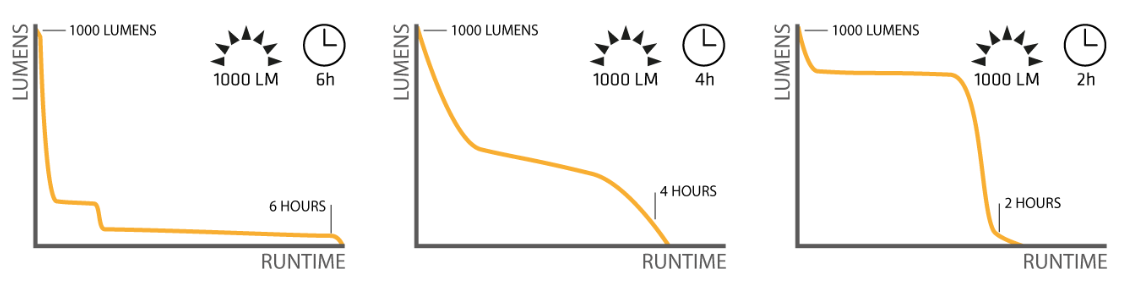
All three lights start at 1,000 lumens and have been tested according to the ANSI/NEMA FL 1 standard.
Yet their actual light output over time differs significantly. If you only compare the specifications, the light rated at 1,000 lumens with a 6-hour runtime might appear to be the best choice.
However, only the light output curve reveals how much usable light you actually get during those 6 hours.
Our principle: transparent performance data for informed purchasing decisions.
WHAT SHOULD YOU LOOK FOR WHEN CHOOSING A LIGHT?
Don’t just compare lumen ratings and runtimes. Pay attention to the light output curve.
Only the light output curve shows how brightness actually changes during operation and whether the light will meet your specific needs. If a manufacturer does not publish a light output curve, ask for it.
Because when you know the actual light output over time, you can make a more informed purchasing decision.
WHY DOES LIGHT OUTPUT DECREASE?
More light means more heat.
Almost all high-performance flashlights and headlamps reduce their brightness over time during operation. The primary reason for this is heat generation.
The higher the output of an LED, the more heat it produces. To protect both the LED and the electronics from overheating, the output must be reduced when necessary.
The key difference is how much and how quickly the brightness decreases.
Some lights drastically reduce their output after a short period in order to achieve longer runtimes. This can result in impressive technical specifications, but not necessarily in the best usable light output.
THE SUPRABEAM PHILOSOPHY
Maximum usable light output instead of short-lived peak performance.
At Suprabeam, we believe in intelligent power management. Our lights are engineered to maintain the highest possible light output for the longest possible time.
When output reduction becomes necessary due to heat buildup, the light is designed to continue operating at the highest sustainable performance level rather than dropping sharply in brightness.
If longer runtime is your priority, simply select a lower output setting.
The choice is yours: more light or longer runtime.
That is why we publish the light output curves for our products. This gives you a clear picture not only of how bright your light is when switched on, but also of the performance you can expect throughout its actual use.
How do we test?
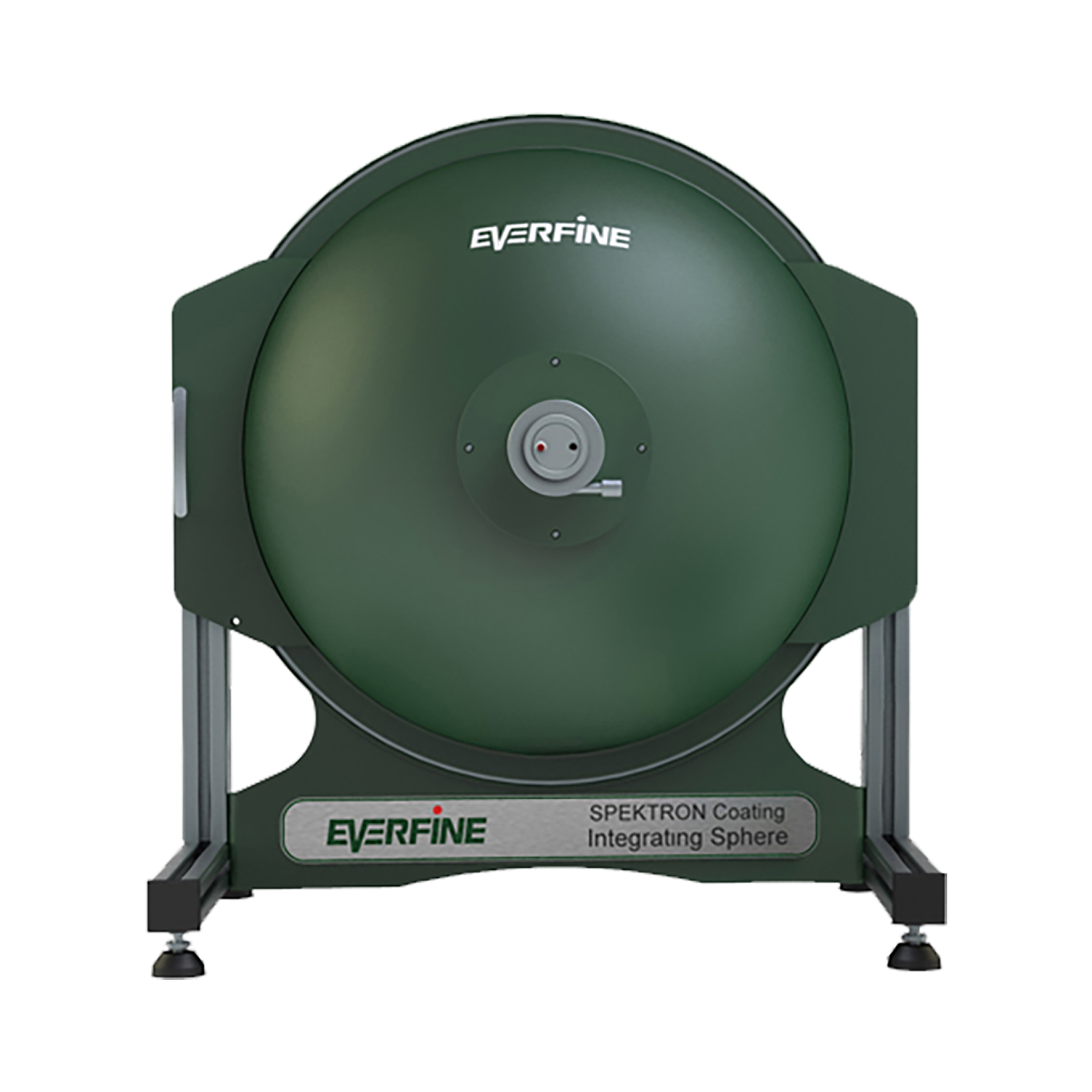
When we test our own products and competitive products, we use a highly specialised light sphere. This way we can measure the lumens output and runtime. We make every test and graph with the same setup:
- Turn on the torch/headlamp
- Close the light sphere
- We test until there is no more power left in the battery. Or until it is down to 10% lumens output.